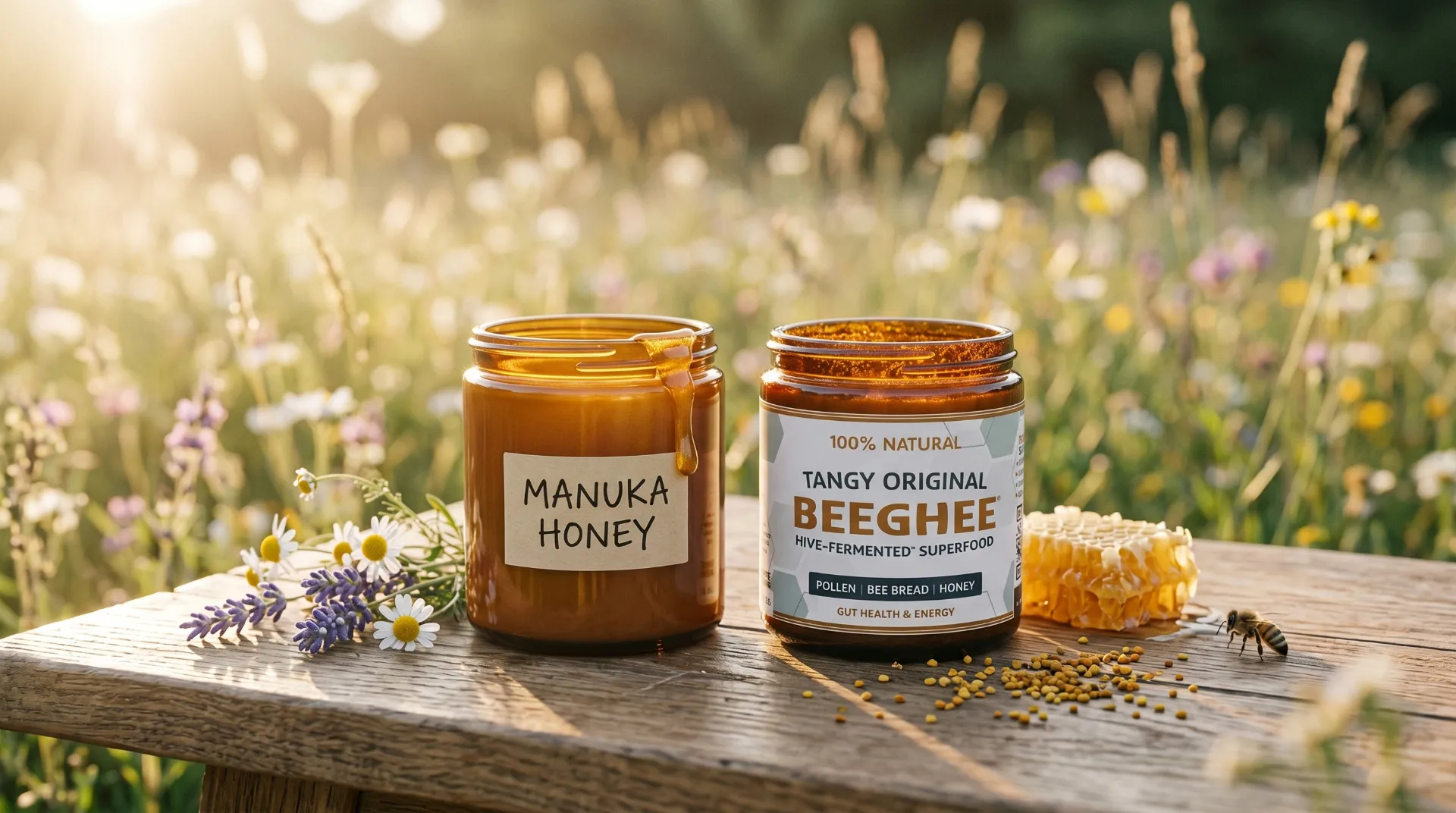
Bee Biology
Manuka Honey vs. Beeghee: Two Gifts from the Hive, Two Very Different Jobs
Destroying bad microbes and supporting a healthy microbiome
Josh Galt · · 10 min read
Research-backed insights into bee bread, gut health, and ancestral nutrition.
Destroying bad microbes and supporting a healthy microbiome
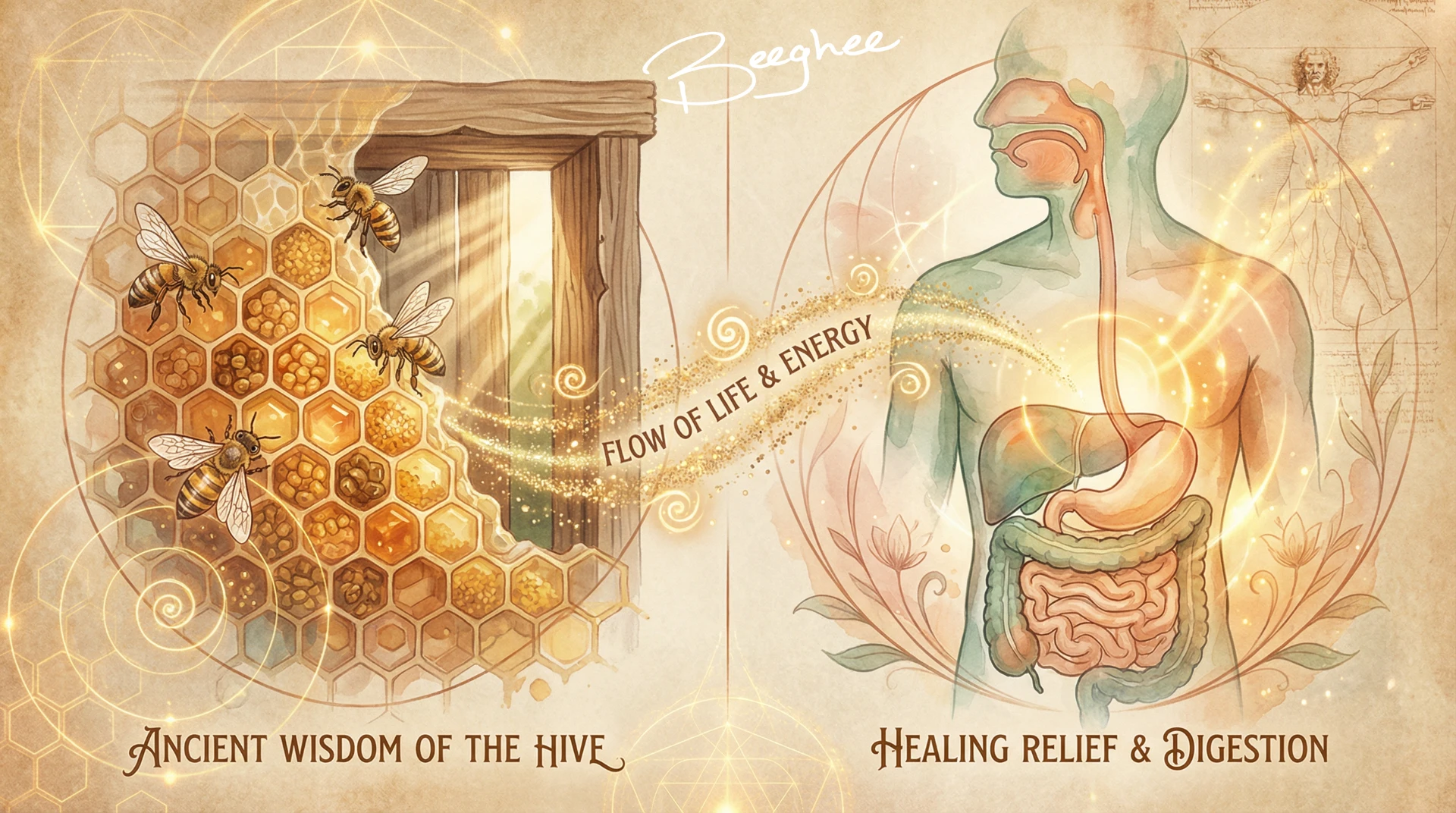
How a 100-million-year-old fermentation process might just be the missing piece in your digestive wellness puzzle.
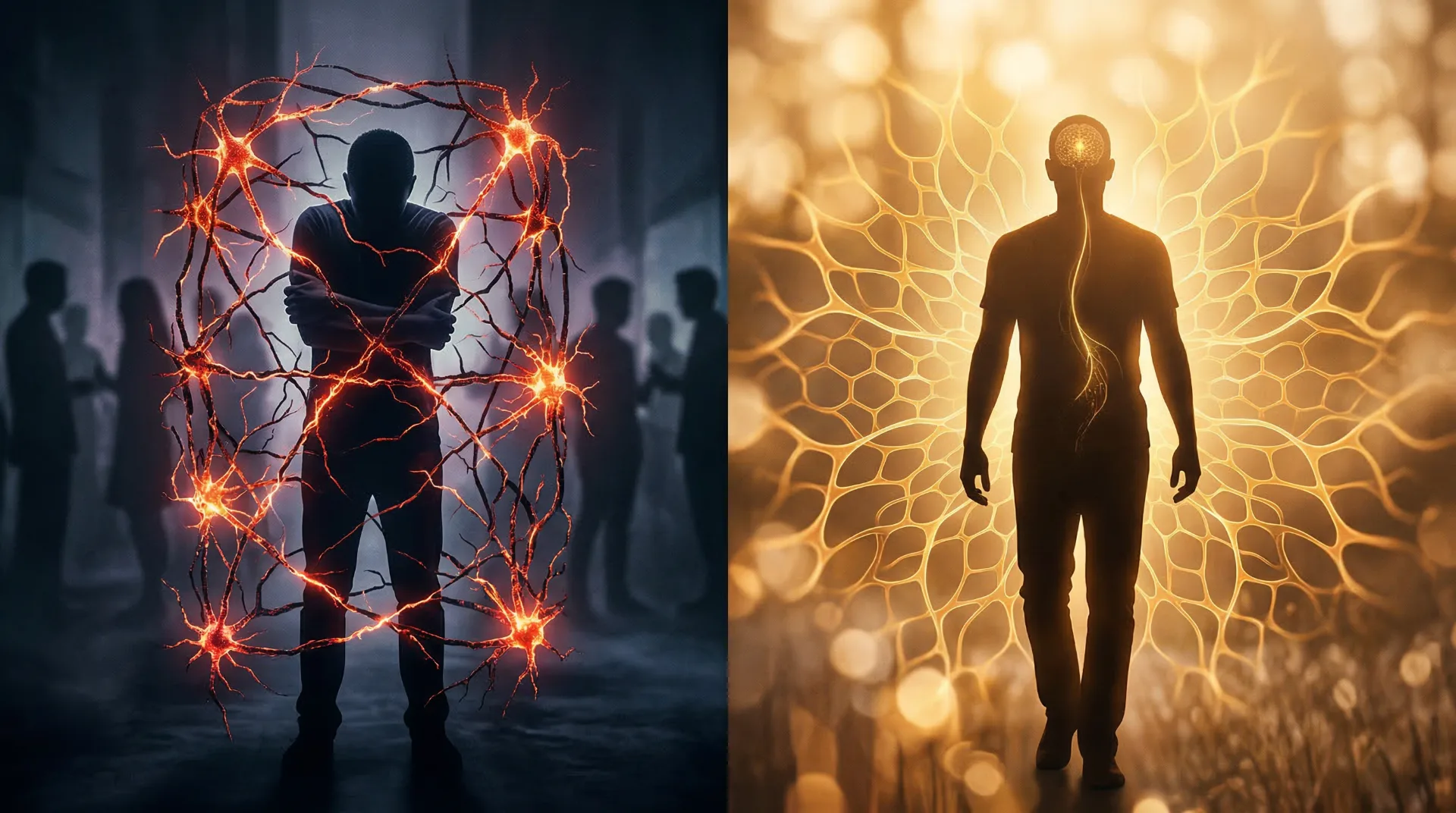
How gut inflammation destroys GABA production, why alcohol temporarily mimics what your body should make naturally, and how living hive-fermented bee bread delivers GABA, GABA-producing bacteria, and the precursors to rebuild calm from the gut up.
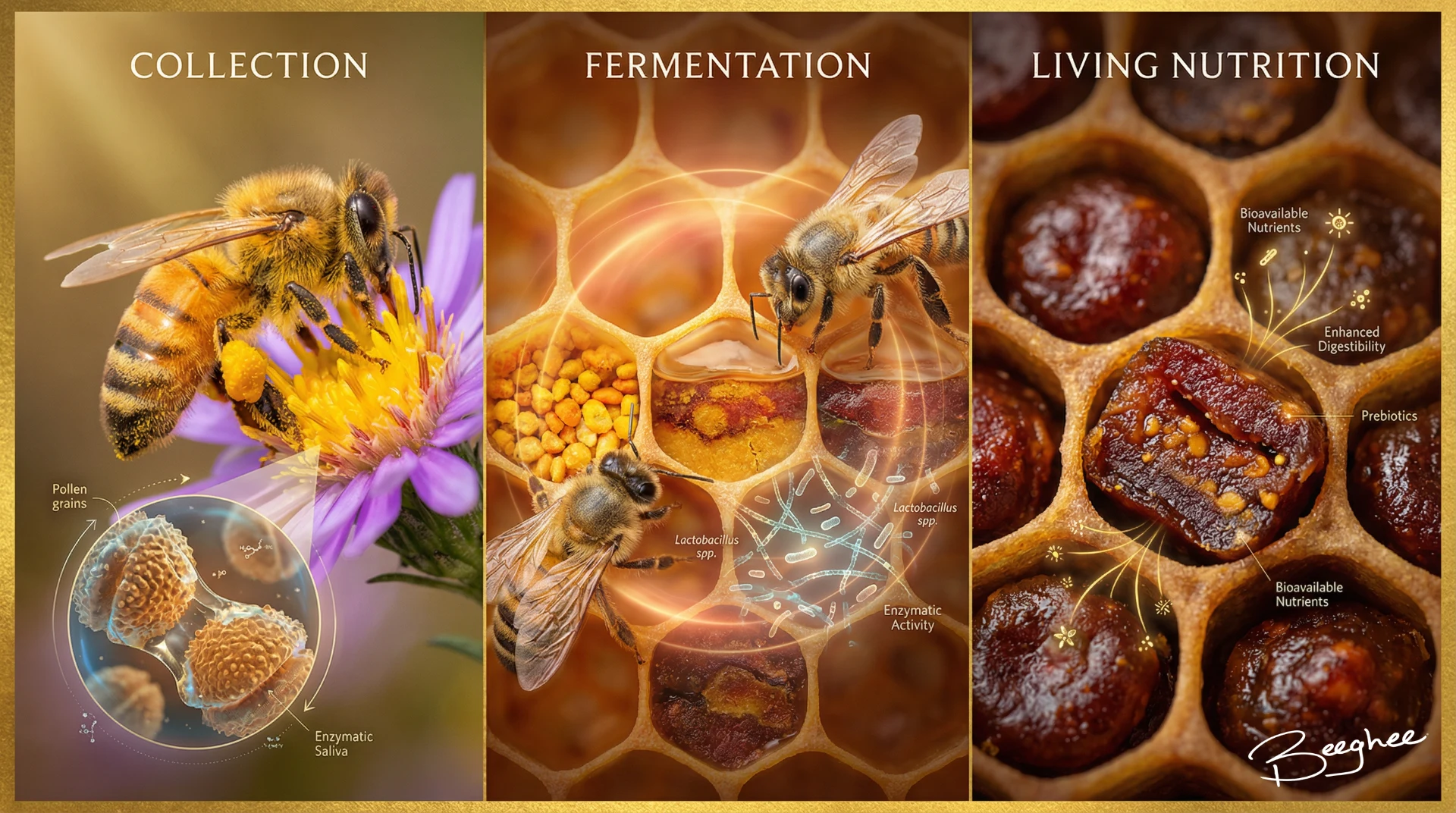
An in-depth look at how bees transform raw pollen into living bee bread through The Fifth Ferment.
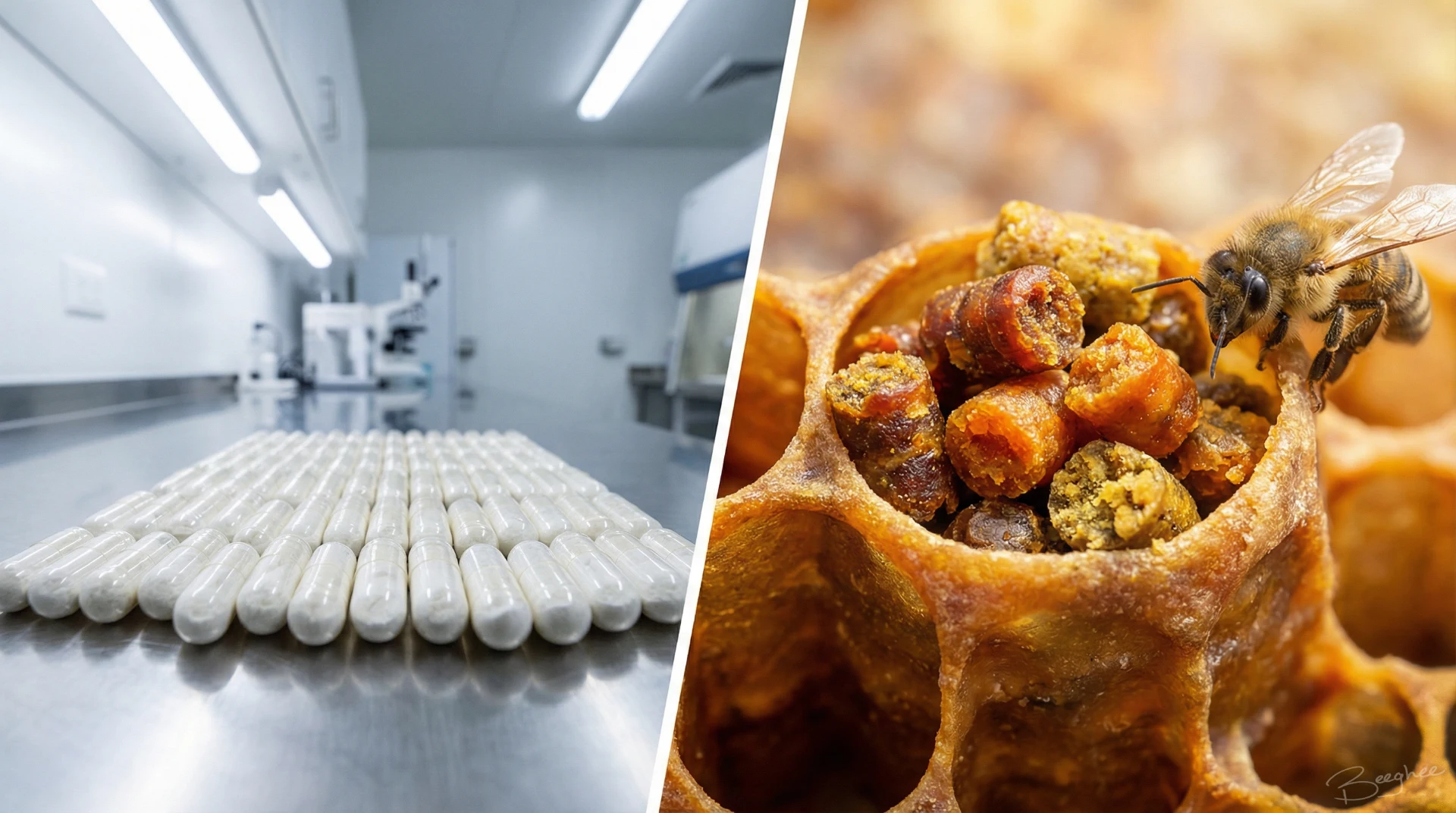
Understanding why hive fermentation creates a more bioavailable probiotic food than manufactured supplements.
The Fifth Ferment™ is our name for hive fermentation – the natural process bees use to transform pollen into bee bread. Unlike the four commonly recognized ferments (alcohol, lactic acid, acetic acid, and alkaline), hive fermentation happens entirely inside the hive, using the bees' enzymes, microbes, and stored honey. This process keeps the food biologically alive and begins transforming it long before humans ever eat it.
Drying stops biological processes. Fermentation preserves them. Most pollen and bee bread products are dried or powdered for shelf stability. Once dried, biological activity slows or stops, and the food becomes an ingredient rather than a living system. Beeghee is never dried or powdered. It remains a fresh hive ferment, preserved in the same living state the bees created inside the hive.
Alive means biologically active at the moment of eating. Beeghee is a fresh ferment, not heat-treated, dehydrated, or pasteurized. Its enzymes, organic acids, and naturally occurring microbes remain intact, just as they exist inside the hive.
Pre-digestion means fermentation begins transforming food before it enters the human body. During hive fermentation, bees use enzymes and microbes to start breaking down pollen's complex structures, turning raw pollen into a form the body can work with more easily.
Probiotic pills add isolated organisms to the body. Fermentation transforms the food itself. In hive fermentation, digestion begins within the food matrix, so nutrients, enzymes, and microbes evolve together as a system rather than as separate ingredients.
Florageprint™ refers to the natural floral and ecological signature of each batch of Beeghee. It reflects the diversity of flowering plants visited by the bees, the season, and the surrounding ecosystem. Because Beeghee is not dried or standardized into a powder, this natural variation is preserved rather than stripped away.
Beeghee is eaten, not swallowed. Unlike pills or powders that rely on discipline, Beeghee is meant to be savored. Humans evolved to eat fermented foods as nourishment, not to consume isolated ingredients as a task.
Start with about one teaspoon daily. Beeghee can be eaten straight from the spoon or paired with foods like yogurt, toast, fruit, or dark chocolate. Because it is a living food, it does not need to be taken at a specific time of day.
Everyone's sensitivity is different. Fermentation can change the structure of some compounds found in raw pollen, but if you have known pollen or bee-related allergies, start with a very small amount and consult your healthcare professional if unsure.
Beeghee is produced in the cloud forests of Veracruz, México, where bees forage across diverse flowering ecosystems. We work with small-scale, regenerative beekeepers who prioritize hive health, ethical harvesting, and ecological balance.
Capsules and powders require drying, encapsulation, or extraction. Each of those steps shifts food toward ingredient logic. Beeghee stays in food form because the fermentation, texture, and flavor are part of how it is meant to be eaten and experienced.